An Afternoon in a Town the Rails Built
Some towns end and some towns just get quiet, and this one went quiet without leaving. I spent an April afternoon in a river town where the tracks still run through the middle. It sits at the bottom of a gorge in Fayette County, reached by one narrow road. The national park keeps the buildings standing, and the rest is left to the weather.
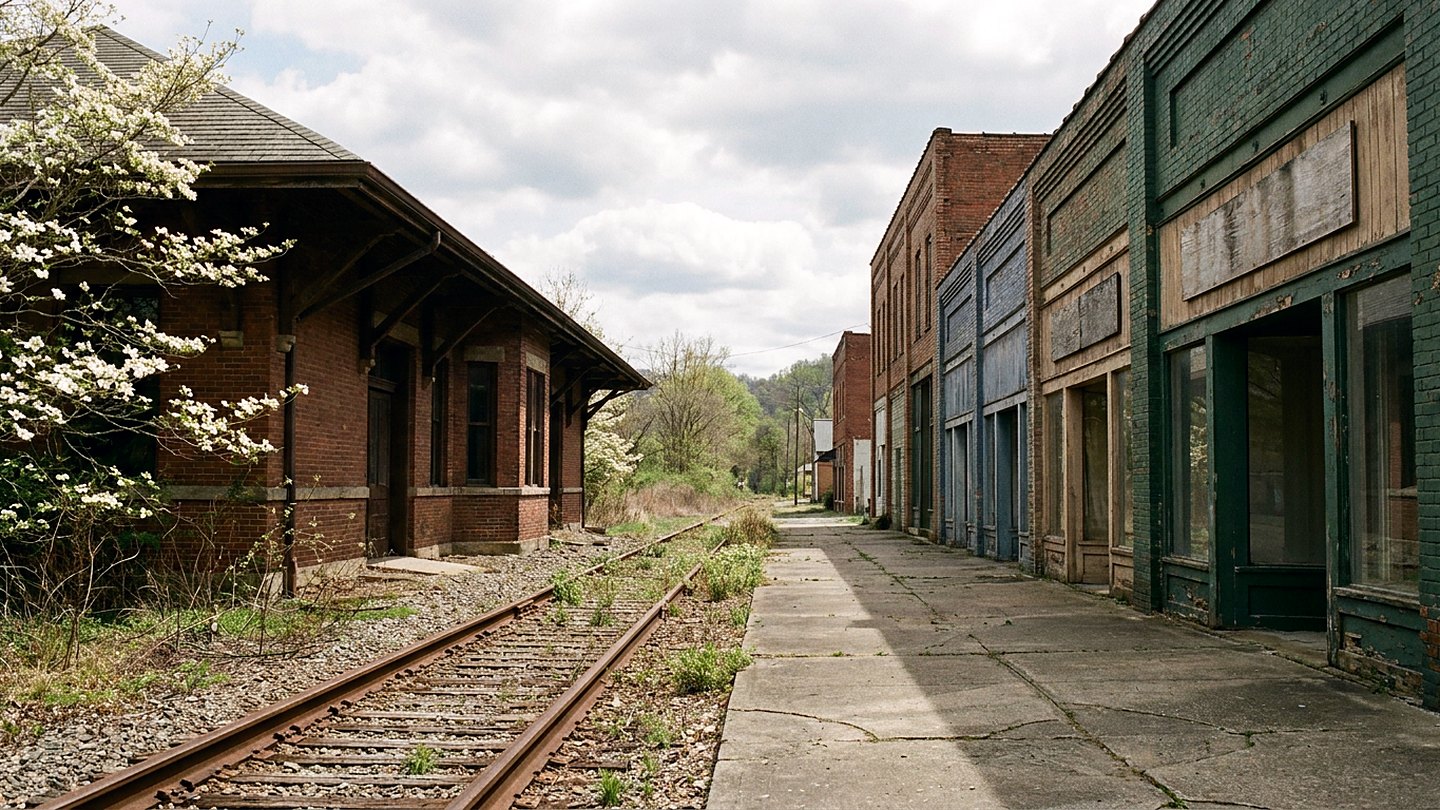
At its peak this place moved more freight than most cities its size ever handled. There was no main street because the rail line was the street, and it still is. Buildings face the rails across a strip of cinders about the width of a sidewalk. That single fact explains the whole layout better than any exhibit in the depot does.
I went on a Tuesday in the third week of April with the leaves about half out. Spring down in the gorge runs ahead of the rim by a week or better. I had the depot platform to myself for most of the time I stood on it.
Getting down to the river
I pulled out at quarter past one. The drive from Charleston runs seventy-four miles and took me one hour and thirty minutes. Most of that distance is four-lane, and the last part is anything but four-lane. A county road leaves the highway near an old company town and starts down toward the water. It runs about seven miles and drops most of the gorge wall in the process.
The pavement is one and a half lanes wide with grass growing at the outer edge. Curves are tight, blind, and stacked, and the guardrail gives out for long stretches. I met three vehicles in seven miles and had to back up once to let a truck through. The county keeps the surface patched, and there were no holes bad enough to slow me. I would not take that road in a heavy rain or with fresh leaves on the pavement.
Near the bottom the road crosses the river on a one-lane bridge with rails in the deck. Cars and trains use the same crossing, which I have seen in only a few places. You wait at a signal, then run the deck with the rails under your tires. That crossing sets the tone better than any welcome marker could ever manage.
The street that is a track
On the far side the road ends in a gravel lot beside the old commercial block. Two brick buildings stand where there were once seven or eight in a solid row. One is three stories with arched windows and a stone base cut square at the corners. The other is lower and plainer, with the top floor windows bricked shut years ago.
Between the buildings and the rails there is a strip of packed cinders and gravel. That strip carried every delivery, every passenger, and every bit of business in town. You can stand in the middle of it and see the whole commercial district in one look. It takes about forty feet of walking to cover what used to be a downtown. Grass has taken the lots where the missing buildings stood, and the foundations still show.
The rails are live, and I stood well back from them the entire time I was there. Two long strings of loaded cars came through while I was on the ground. The sound arrives before the light does, rolling up the gorge from around the bend. You feel it in the cinders under your boots for a good thirty seconds ahead of time.
The depot and what it holds
The depot sits at the upstream end, a long low wooden building with a wide platform. It was built early in the last century and rebuilt by the park in the 1990s. Yellow paint, dark trim, and a roof that overhangs far enough to keep the platform dry. It reads exactly like a working building, which is the point of the restoration.
Inside there are exhibits about the town, the rail yard, and the families who lived here. Hours are seasonal, and in late April the building was open on a limited schedule. I got twenty-five minutes inside before a group came through and filled the small room. The platform outside is the better place to stand anyway, because it faces the rails.
Upriver from the depot the old servicing area is mostly gone, with foundations left. You can find concrete pads, a few pits, and the stub of a tall structure near the bank. The park has markers at the main ones, and the historical society fills in the rest. Walking that stretch and back took me thirty-five minutes on cinders and packed gravel.
What the quiet sounds like
Between trains this place is as quiet as anywhere I have stood in the state. The river makes a low steady noise that you stop hearing after about ten minutes. Then a warbler starts up in the brush and sounds like it owns the whole gorge. I sat on the platform edge for twenty minutes and counted four different birds calling.
Fewer than ten people live here now, which is a number the park does not hide. A handful of houses stand up the hill behind the depot with cars in the yards. Somebody was running a mower on a Tuesday afternoon and it carried the whole valley. That is the part I did not expect, because I came for ruins and found neighbors.
The gorge walls climb about 1,000 feet on both sides and cut the daylight short. Sun left the west side of the tracks by four o'clock while the east wall stayed lit. Redbud was finished, dogwood was open, and the sycamores had leaves the size of a hand. April down here is a different month than April up on the rim, by a full week.
What it came to
The day ran four hours and forty-five minutes from my driveway back to my driveway. Driving took three hours across 148 miles, and fourteen of those miles were the county road. Time on the ground came to one hour and forty-five minutes, split between the block and the yard. I had about two hours and fifteen minutes of daylight left when I got home.
This trip does not suit a driver who dislikes narrow pavement with almost no shoulder. The way down is steep, blind in places, and unforgiving of a wide vehicle. Footing at the bottom is cinders and gravel, loose in spots and uneven near the rails. Stay well clear of the track, because the line is active and the trains come fast.
Go in spring before the leaves close off the view of the walls above the town. Come midweek if you want the platform to yourself for more than a minute.
The count
- Time on the ground 1 hour, 45 minutes
- Driving 148 miles in 3 hours
- Daylight left 2 hours, 15 minutes
Checked against
- Historic district and depot pages for the national park in the New River Gorge
- Local historical society material on the town and its rail yard
- County road listings for the descent into the gorge

Wes CardwellFounder and editor. Charleston, West Virginia. Every trip on this site was driven, walked, and timed by hand.