Before you settle in
This journal keeps one key in your browser storage, so this panel stays closed on your next visit. Nothing is measured while you read, and no consent-based advertising is loaded unless you agree to it here.
Choosing only the basics leaves the journal with what it needs to draw pages, and nothing more. You can clear the key from your browser at any time.
Hour Trips
An hour trip is the one that fits between other things. Sixty minutes on the ground, plus whatever the drive takes, almost always inside the Kanawha Valley or one valley over from it. No packed bag, no plan worth the name, no need to tell anybody you are going. You leave, you stand somewhere for a while, you come back, and the rest of the day is still waiting where you left it. This section holds those trips in the order they were filed, newest first, with the hours and miles printed beside each entry. Most of them started as a way to get out of the house before dark.
What an hour actually holds
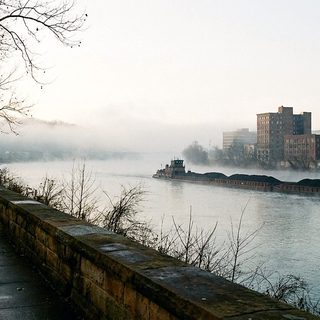
The hour is the honest unit for a place you already live in. It is short enough that nothing has to be arranged and long enough that something happens: light moves off a ridge, a tow pushes loaded barges past a landing, a clock face on a courthouse tower carries a square into its working day. Most travel writing treats an hour as an interruption between destinations. Here it is the whole trip, counted the same way a longer one is counted, in hours, miles, and public ground. Nothing gets padded to make the outing sound larger than it was. If a visit ran to fifty-five minutes and the drive took seventeen each way, the entry says so and stops there.
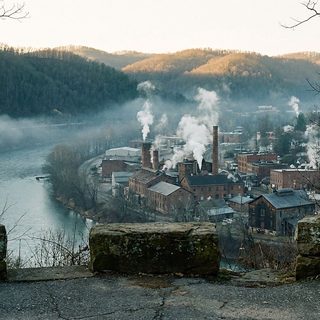
Charleston helps. The city sits where the Elk River meets the Kanawha, which means water is never more than a few minutes off, and the valley walls stand close enough that a road can climb out of downtown and reach an overlook before your coffee cools. Inside an hour of downtown there are boat landings, a lock and dam, a swinging bridge on a side creek, riverfront steps, courthouse squares, and hillside streets that end in views nobody put a sign on. None of it needs a season or a reservation. Most of it does not even need good weather.
The test for this section is a plain one. On-site time is about an hour, give or take the half hour a place sometimes takes for itself, and the drive stays under an hour each way. That puts these outings between one and three hours from door to door. When a trip outgrows that shape, it moves to Half Days and gets counted there instead. The count block at the end of each article shows exactly where the time went, so you can see whether an entry is really an hour of standing or forty minutes of standing and twenty minutes of hunting for a place to park.
Season changes the hour more than distance does. In January the light is gone by five-thirty, so an hour trip after work means headlights on the river road and a walk with a flashlight. In July the same hour works before eight in the morning, when the humidity is still down in the grass and the parking lot is empty. Off-season entries note frost on stairs, closed restrooms, and gates that swing shut earlier than the posted hours suggest. On-season entries note heat, glare off the water, and how quickly a small lot fills on a Saturday.
These trips are not a challenge and they are not a list to complete. Some involve a flight of metal stairs to a platform with no shade and nowhere to sit. Some end at a gravel pull-off wide enough for two cars where the shoulder drops away fast. Each article says plainly who it will not suit and what the footing is like, because an hour is short enough that a bad surprise ruins the whole thing. If you want the method behind the numbers first, it is set out in how a trip is counted, and the reason this journal counts hours instead of anything else is explained on the About page.
The hour list
Trips filed in this section
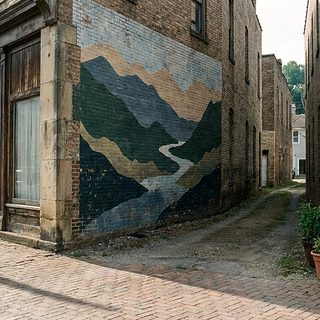
- 1 hour, 6 minutes on foot5.0 driven, 1.7 walkedEarly June, clear and still
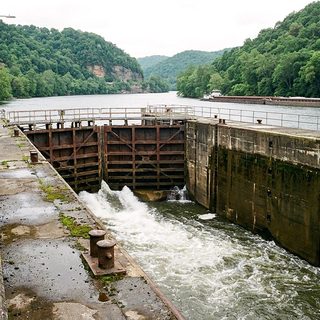
- 1 hour, 34 minutes at the rail52Mid May, warm and humid
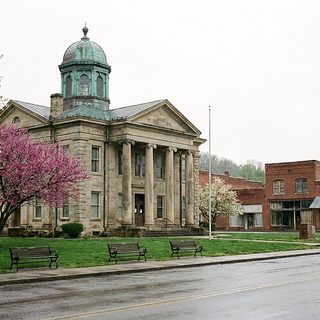
- 64 minutes on the square, 2 hours 45 minutes door to door78Early April, cold at the start
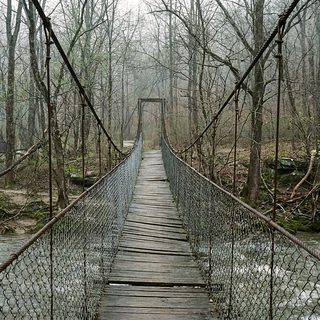
- 1 hour, 4 minutes on and around the bridge41.6Early spring, creek running high
- 55 minutes at the top11.4Late winter, cold and still
- 1 hour, 5 minutes on the walkway4.6Winter, clear and calm